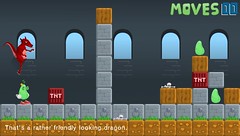
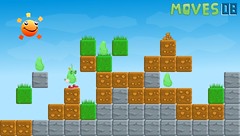
First Screens from “Jorvick” RPG

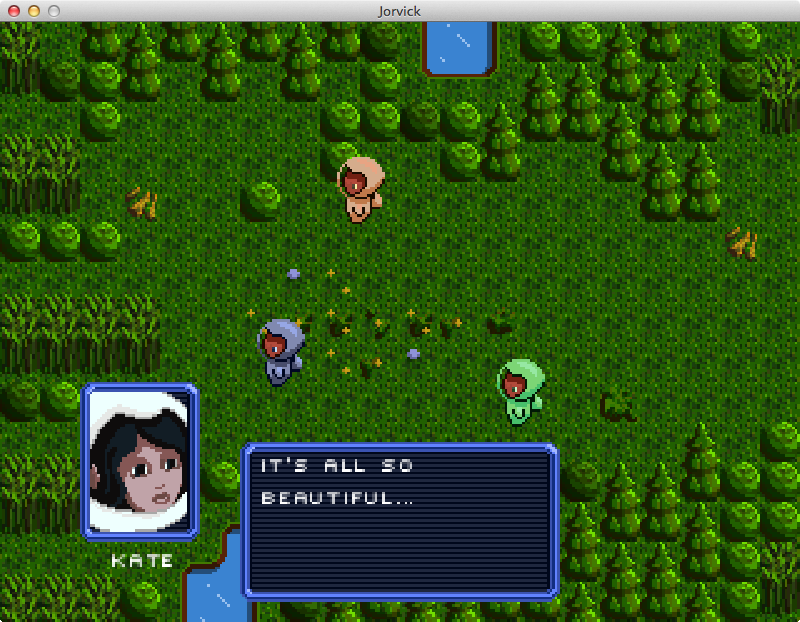
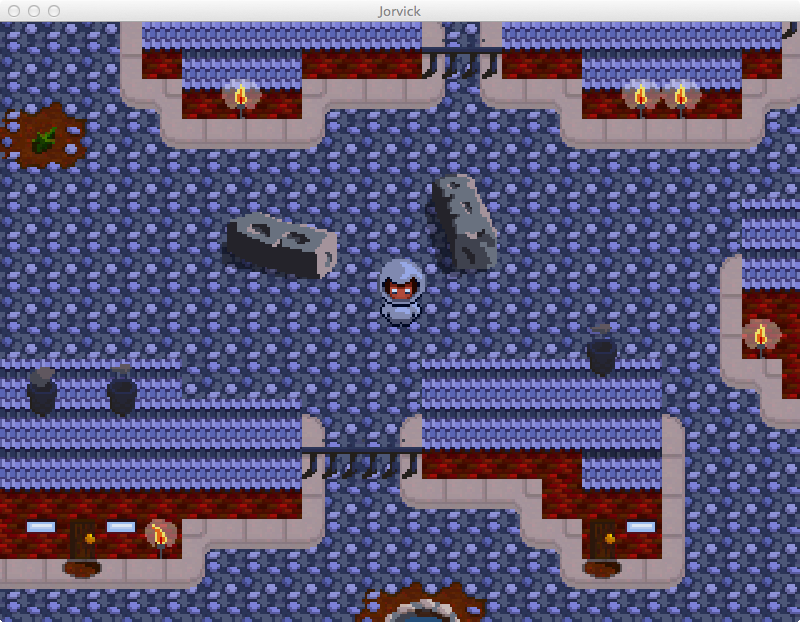
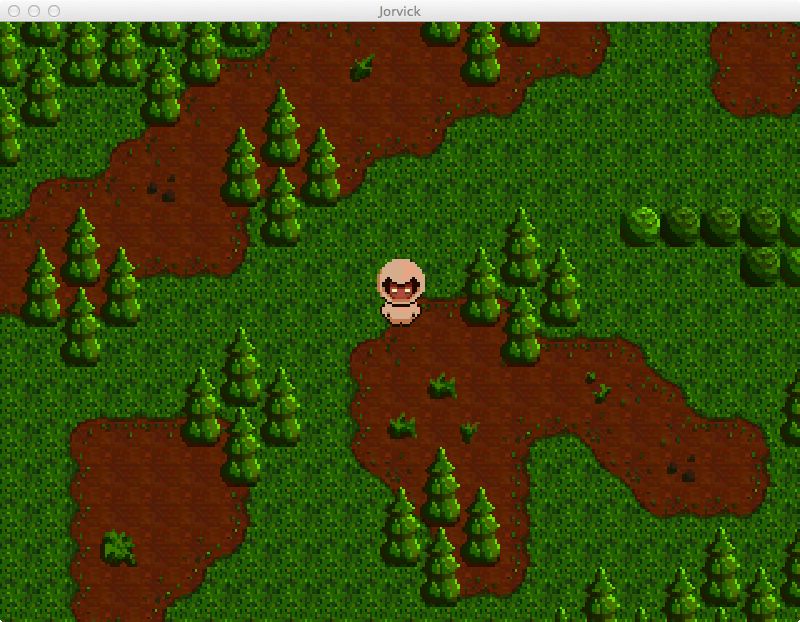
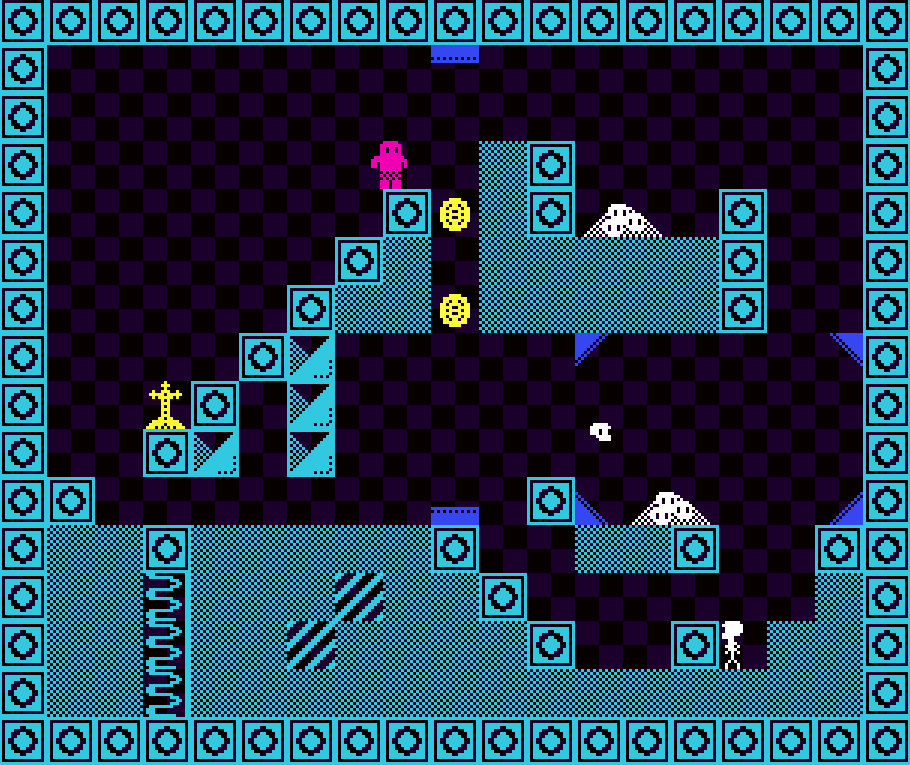
I’ve been hard at work here for the past few weeks and I’m now ready to show some screenshots from the new game I’m working on. It’s called ‘Jorvick’ and is an RPG for PC MAC and LINUX.

I don’t want to reveal too much about the game right now as it’s very early days and much will change before anyone gets to play it. It is playable right now in a very basic form and there are some fine details to be worked out but these are in engine shots and not mock ups. Everything you can see is playable to an extent, you can explore some of the areas of the world of Jorvick and engage in thrilling combat (albeit with a limited move set and some slightly odd combat animations), you can even watch some of the in-engine cut scenes which have been partly scripted.

This is probably the bigest game I’ve ever undertaken and will be my main project for some time to come. Lots of details have not been decided for example, should I work on this game exclusively ’til it’s complete or should It be episodic?

Feedback, as always is welcome. I hope you like the look of it!

-Thom.

Posted in Uncategorized | 3 Comments

Super Skull Smash GO! on Steam Greenlight

SSSG Has just been added to the Steam Greenlight process.

If you want to see SSSG on the steam store then all you need to do is visit this link:

http://steamcommunity.com/sharedfiles/filedetails/?id=93052583

And vote it up!

Thanks,
Thom.

Posted in Uncategorized | Leave a comment

TACSgames gets a logo

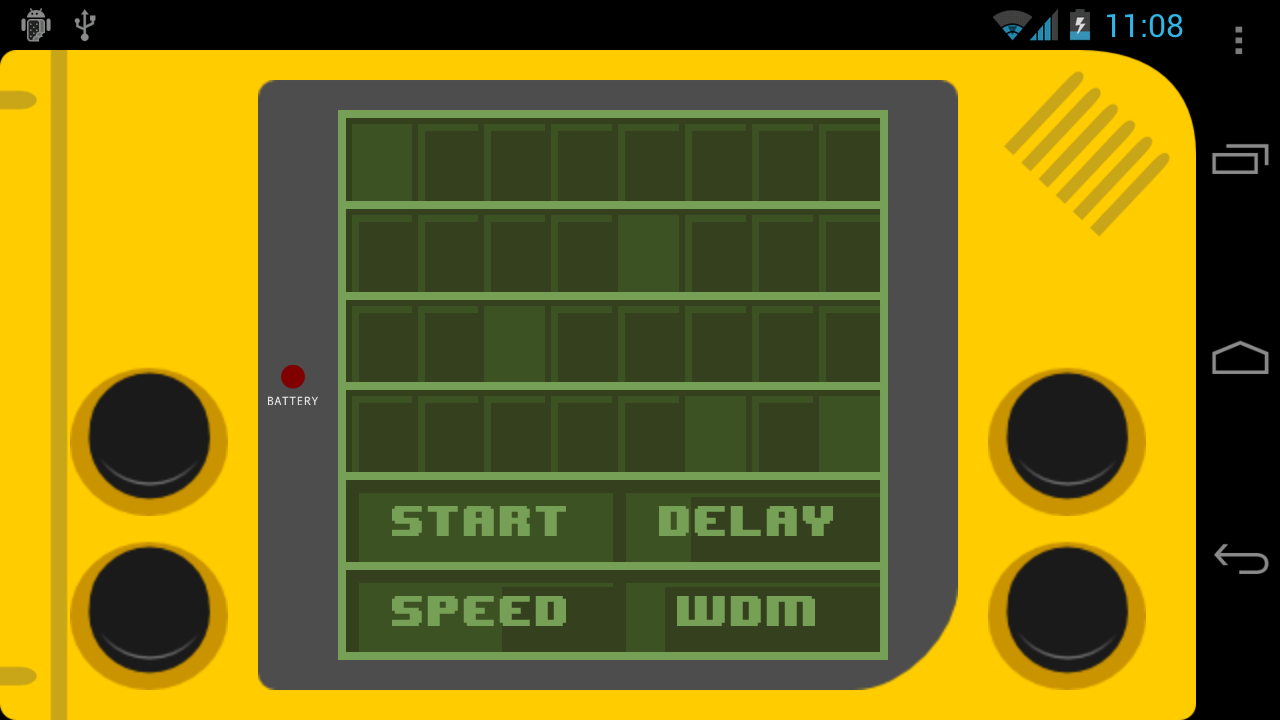
TACSgames hasn’t ever had a logo before (which seems like a strange thing for a games company). I’ve now corrected this oversight. Below are two versions of the TACSgames logo, one in green (like on a gameboy 4 colour screen) and one in colour (which will be used for Super Skull Smash GO!).

These are obviously pixel art versions for the upcoming games of that style. A nice smooth vector version should appear at the top of this website at some point in the very near future.

The logo is supposed to look like an old school gaming directional pad and also a little bit like a scary face with red eyes and a toothy grin. These will appear in the upcoming videos for PROJECT SPACE DARK and Super Skull Smash GO!

I hope you like them (and that they are visually distinct from other games company logos).

Posted in Uncategorized | Leave a comment

Sounds of the 90s

Image

When I was thinking about the music I wanted for ‘Super Skull Smash GO!’ I knew it had to be some tasty retro goodness. I wanted something authentic, preferably either synthesised in real time for that organic, raw arcade feel or synthesised on real retro hardware, as honestly preserved in the recording process as possible. The rules I laid down for myself were such that it needed to be ‘real retro’ in some way. I tried a few things along the way each one had it’s own merits and drawbacks. 


Previous Approaches to Game Audio

In a couple of my previous games I’ve used real musical instruments from guitars to ukulele to percussive instruments to make music and effects for games. It’s something I very much enjoy doing but this approach I dismissed out of hand as it didn’t suit the style of game.

For meltdown moon the bulk of the music was composed on a DS lite using the KORG DS-10 software, which if you’ve never played with and you’re into retro analogue synths, you really should get hold of a copy. This worked very well for a spacey action puzzle game. The use of huge quantities of reverb and delay make the two instrument track sound like a hundred. I felt again that this was a bit too advanced for my little retro game.

My last two Android games have had music composed in Logic on a Mac using software synths however it’s very hard to produce something as simple as a PWM style monophonic synth and have it sound authentic. Much time was (and still is) spent debating the qualities of digital versions of classic analogue synthesisers and how hard it is to produce really warm sounding software synths. I’ve found it equally hard to get that pleasing, chiming tone of the hardware audio from a classic games console.

I’ve been experimenting a lot lately with KORG’s new cheap (some might say lo-fi) analogue synths; the monotribe and monotron. I’ve recorded from them in several ways ranging from direct line output to recording from their internal speakers in confined spaces. I really like their honest analogue sound. Using these devices would be bending the rules a bit since a digital game with analogue audio might jar a bit somewhere deep in our minds.


Breaking it Down

Image

Depending on how you look at it Super Skull Smash GO! could be a NES game or a 2600 game or an EGA PC game. Lets take a look at these platforms and find out what they were actually capable of, in terms of sound to get a feel for what I should be aiming for.

[ It’s worth remembering here that a system’s audio capability needs to be shared between game music and sound effects. If a retro console could produce three channels of sound, then at least one of them would regularly be reserved for the sound effects channel, this way sound effects could be played without having to drop out an instrument in the background music. This doesn’t really apply these days, modern computers are quite capable of synthesising very complex soundscapes. ] 

NES

The Nintendo Entertainment System is famous still for it’s sound system, there are communities all around the internet who listen to NES game music for pleasure (abstract of their original games). They were capable of 5 channels of sound including two PWM and one triangle wave channel, one white noise channel and an DPCM channel.  

I’ve never written any software for the NES but this feature set is reminiscent of some of the other nintendo platforms I’ve worked with so I’ve a fairly good idea of what this system is capable of in terms of music production (also I’ve listend to lots of nes music too, which helps).

The NES could quite easily produce two or three instrument music with percussion while also kicking out some simple sound effects for in game actions.

Making sounds like this (or even recording from a real NES) are a possibility, it fits with the feel of the game and they sound great.

Atari 2600

The 2600 had a very simple sound system that was on the same chip was the graphics driver, it had two  ‘voices’ with a very limited range of pitches. Making sounds like this would be easy and there would be no need to use a real device since their simple sound engine could be easily emulated.

EGA PC

The EGA standard allowed all 16 CGA colours simultaneously and substitution colours from a full pallet of 64! It was introduced in 1984 when separate audio cards were very uncommon and so PC speaker was all that was available. They can create little tunes, bleeps and bloops and I’ve even heard some very acceptable MOD playback from a pc speaker using software PWM synthesis but this really does not sound pleasing or retro, so, nothing to aspire to here. 


So What are the Rules?

It seemed to me at this point that I should be trying to emulate something like a NES, I shouldn’t be using more than 5 channels of simultaneous audio and I should really go easy on the effects, since, none of the above platforms were capable of anything like that.

Image

It was at this point that I remembered back to the experiments that I had done with pure data (or pd). Pure data is a graphical programming language that makes audio processing or synthesis a really pleasing and worthwhile endeavor. From basic building blocks of logic and maths comes a very powerful way to build simple synthesisers, sequencers and drum machines. (It’s used for much more  besides but my interest in it was just for audio).

The other great thing about pd is that it’s very easy to embed a pure date ‘patch’ into a piece of software and have it synthesise in real time. The patch can be hooked into your app / game using libpd (of which there are many flavours). I did a few experiments and ultimately release a toy app called GAME BEAT DRUM. Audio synthesised within pd can change organically with the state of the game, because it’s being synthesised in real time, which is a great plus. I didn’t use pd in the end since there was another better solution available to me but I thought it was worth mentioning it here since I think it’s a powerful tool which I hope to exploit in the future.


The Obvious Solution

You’re probably asking yourself right now why this post is called ‘Sounds of the 90s’. You’re thinking that all the hardware above was released in the 80s. Well, you’re entirely correct. However there was an obvious solution to this problem that I’d not considered. I wanted a device that had 4 or 5 channels of audio, that could produce PWM style  bleeps and bloops, but hold a tune. Something that I could use with authentic retro hardware and still compose for. You have it, thats right. The Nintendo DMG-01. The dot matrix gameboy. Audio hardware very similar to that of the NES, two channel square wave, one wave and one noise (with envelope!). 

[ Before anyone jumps in and tells me, don’t fret, don’t worry and it’s not important. I am aware that the gameboy was available in 1989 (although not in the EU) but the bulk of the units shipped between 1990 and 1997 when the GBC was released. Even worse, the device I actually used to sample from was a 1995 model ‘play it loud’ yellow DMG-01. ]

Lots of music is still written for the humble grey gameboy, lots and lots. There are many tools to help you do it using real hardware too. That way to get the real authentic chiming PWM and gritty, shitty wave channel in all their 8 bit glory.

One famous tool is LSDJ, software that lets you write music directly on the device and perform in real time. I had access to a modern LDSJ cartridge and even a proper old gameboy.

Then I made the mistake. Then I broke the rule.


The Broken Rules

I used a piece of gameboy music I had already half composed for the soundtrack in the end. It fit rather well and was already set up for live play in LSDJ, so I used it. All of it. All four audio channels. The Horror. Yes I accidentally spend the entire audio budget on the music. But not to fear, rules are of course indented for breaking, in moderation.

I then spent some time trying to get a pleasing set of audio samples for the sound effects. I needed a good bouncy jump and a nice bright chiming coin collection sound. No matter how I configured the interments in LSDJ I couldn’t quite get the sounds I wanted and, since the feel of the game is what is most important, I broke another rule and fell back on classic analogue sound generation.

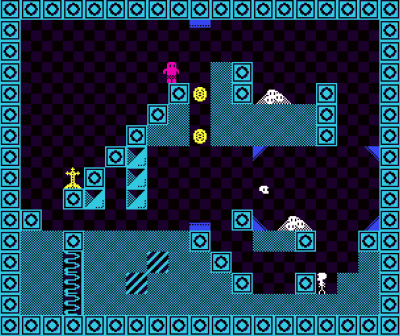
The sound effects for SSSG are almost all sampled from the KORG monotribe analogue synth. I did try some other things but the monotribe, at that time, made all the right noises.
Image

In the End

So, with a really authentic classic games console soundtrack and slightly dubiously sourced sound effects ‘Super Skull Smash GO!’ was alive with retro noises. Some of them are genuine, all of them sound right. The feel of SSSG had been a hard fought battle with self imposed rules. I’m not sure I’ll ever be so restrictive again but the exercise has been fruitful. I hope you get a chance to play it very soon when it’s released. 

Please do check out the trailer and let me know what you think.

 

Posted in Uncategorized | Leave a comment

Breaking the rules

I visited the Brighton Centre for what was probably going to be the last time in July. I was about to leave the country for foreign climes. I’d given myself the day off to walk about in the sunshine and later hook up with my pals and take a look at the new Borderlands and Aliens games they had on show there. We had a good time. Won some goodies, played some demos and got to listen to Molyneux and Pitchford go on about this and that. But that’s not what I will remember most about the show.

When I’d agreed to go I didn’t really, honestly, know what I was going to see, I’d read almost nothing about it and had been invited to join some friends who already had tickets. I said it was a good idea since I’d been working so hard on my Android games I could do with a break. I then forgot. A week before the event I’d remembered something was going on and rushed to book a ticket. In my worry-induced haste, again, I forgot to find out what REZZED actually was. 

“PC and Indie games show” Is what the sign said on West street. I think these days you’d find it hard to categorise me as a PC gamer. Long ago it’s what I had access to and, so, was my de facto weapon of choice, but today I play more on a console than anything else. As I turned the corner onto the seafront road I wasn’t sure If I’d get much out of the games on show, but then, that wasn’t really why I’d come. 

The front side of the Brighton Centre had been adorned with a two hundred thousand foot banner for Borderlands 2. Ah, perhaps I will get something out of the games on the show floor, I thought.

Once inside I learned that I was in for a bit of a wait regarding my friends. This gave me time to wander around on my own and take everything in. Sure, there was Borderlands and Aliens: Colonial Marines, but I was drawn to the indie gaming section, with the bright lights, flashing colours and instructions for how to play writing in black marker above each monitor. Some said ‘w’ ‘a’ ‘s’ ‘d’ etc, giving explicit gameplay instructions, some simply said ‘put on headphones’ or ‘explore’. 

I didn’t play them all, but out of all the games on display in the whole show we spent more time with the likes of mcpixel than with borderlands.

One game in particular I was taken with. Its name I can’t remember (if you know, please tell me) but in a way it’s not important. It looked very much like an atari 2600 game. It has a very simple colour scheme with two single colour player sprites and a single colour ball sprite. A two player side scrolling platform game, the aim of the which was to kick the ball into the opponent’s goal. It caught my imagination in a way nothing else at the show could manage. It adhered so closely to a set rules and yet broke them subtly so that my expectations were dashed. All the while, playing the game, I was thinking ‘the rules have been broken, won’t someone think of the rules…’.

As a developer of software and games I’ve been told by my gaming pals that there are some things a gamer isn’t meant to know. My good friends have suffered much from my ability to see ‘into the game’ as they put it, one even calls it ‘matrix eyes’ and does a twilight zone ‘do do do do’ noise whevever I start talking about the underlying mechanics of a game we’re ‘trying to just enjoy’. This ‘ability’ has sucked the joy out of a few games for me (and for others near me) but in the case of this unknown retro indie game it was the cause for great joy. Like a joke put there just for me, a moment shared between people who’ve only met through the artistic medium of software in motion.

Games, like real life, are all about rules. When a game spends time teaching you how a world works, what rules apply in any given situation, they’re training you to think, setting your expectations for what is to come and what better way is there to cause turmoil than to strategically break those rules once they are well established. Many games employ this technique to great effect. A good joke is about a setup and an unexpected turn of events. A broken rule can be funny, exciting, frustrating, empowering or terrifying. Yet a world without rules isn’t any fun at all. Rules are made to be broken but break few or no one will be able to tell what’s changed. Like science.

I look into the game with my ‘matrix eyes’ and while suffering total defeat by my opponent Barry using his arcade-nimble fingers to great effect I see the framework. A framework of rules, but not those of the game we are playing, a set of rules laid down by the traditions of an archaic processor designed to display two play sprites and a ball and nothing else.

Here we have a game running on a pc that could emulate a hundred thousand atari home consoles and yet the developer has chosen to limit themselves to the two player sprites and one ball that was all the 2600 could muster. A pc capable of rendering the worlds of borderlands in its fine artistic detail and yet they were using one colour bitmap sprites. And yet, the frame rate was smooth and high, the screen scrolled around the play area in a fashion I’ve never seen a 2600 manage, and the blocky water that washed up and down at the bottom of the screen, while looking retro and suitably blocky, felt as smooth and well crafted as anything else I’d seen that day. 

I was inspired that day to make a thing. As I often am. This day I wanted to create something new, but that felt old. Something that looked like the games you used to play as a kid, but played like a game that had been made today. I wanted to create a ruleset based on an old technology and break as few rules as possible, while breaking just enough, to make something thats fun and playable.

We also decided it should be called “Super Skull Smash GO! 2 Turbo”. But I broke that rule too.

Posted in Uncategorized | Leave a comment

Super Skull Smash GO! Trailer Released

Here is the new trailer for SSSG! It shows off some of the levels from the first third of the game.

Posted in Uncategorized | Leave a comment

Super Skull Smash GO!

Here is my latest game, SUPER SKULL SMASH GO!, It’s already out with my dedicated playtest team and I hope to get a version available for the general public just as soon as it’s ready 🙂

This slideshow requires JavaScript.

These are all in game shots from the MACOSX build of the game but it will be available for Windows and Linux as well (and if there is any demand at all, seriously, even one guy, then I will release the solaris build too 🙂 )

It’s true, I’ve abandoned mobile for the moment and despite having a couple of games in the works, this is idea trumped them all.

-thom

Posted in Uncategorized | 2 Comments

Play store search weirdness.

Yesterday I submitted my new Android toy GAME BEAT DRUM to the Google Play store and discovered something strange.

I’m used to having to wait a few hours before apps become searchable on the play store but I had to wait over 24h before I could find it. Even then I could only find it by searching for my developer name or putting  GAME BEAT DRUM in quotes.

When you’re asking someone to check out a cool new app you’ve found on the Play store, how often do you enclose your search term in quotes? Me? Never. I assume that Google can handle search. You’d think they could, right?

When searching on the web version of the store I can see some strange behaviour. The search returns 70 results and starts pagination with 24 results per page. It gives me 3 pages of links at the bottom of the screen. However only two of those links actually work. It’s like the number of results returned is truncated somewhere before we get to page through them. We only get to browse about 40 results before the search breaks.

My theory is that the store doesn’t like the word GAME at the beginning of my app name. Search for quoted “GAME BEAT” or “GAME BEAT DRUM” and I appear as the only result. Search for GAME BEAT DRUM (my app’s NAME) and I don’t appear at all. Search for GAME BEAT and I /do/ appear somewhere far down the list (as you’d expect).

I’ve put a support request into the Google Play team and I’ll report back if I hear from them but they’re making it as hard as possible for me to ask any questions of them. I’m guessing they’ll never get back to me.

I’m thinking about changing the name of the app. I’m not really excited about the prospect of doing that. It’s a Game Boy inspired drum machine, I thought Game Beats would be a nice link back to the inspiration. Not to mention that I’d need to change a bunch of manifest details and reproduce icon and in app assets to have the name change make sense once you’d installed the app.

This was supposed to be a silly little toy that I released and forgot about, but it’s become something that I can’t drop just yet because in it’s current form, without a direct link to the store, no one will ever find it!

What a waste of time and effort.

If you have any ideas what’s going on here and would care to shed some light on this situation then please comment or drop me an email or tweet.

-thom

Posted in Uncategorized | 3 Comments

GAME BEAT DRUM – live for Android

Sometimes when you’re working hard on a game or two, it’s easy to get all used up . A creative brain needs time to lie fallow and recoup it’s mental juices. A change is as good as a rest and to extend the farming metafore further (perhaps too far) crop (or app) rotation can be just as successful for rejuvenation as disappearing off to the beach for a few weeks every third month. So I took some time out of my normal game development routine to learn a bit about this and that and make and publish something new. So here it is:

No, wait, HERE it is.

GAME BEAT DRUM – is a game inspired drum machine and step sequencer with a delay effect. It’s available right now for free from the Google Play store and it’s loads of fun. Each drum sound is crafted lovingly from software oscillators and white noise generators, you’ll find no canned samples here, son.

I do feel better for taking this diversion and as a bonus I’ve learned all about sound synthesis and will be taking theses ideas further into the games I’m working on right now.

So go and download it now! It’s fun, it’s free and it’s very, very old school.

-thom

Posted in Uncategorized | Leave a comment

Shark Ahoy! FREE on Android


Shark Ahoy! Has launched on the google play store and Is available FOR FREE, if you can believe that.

Shark Ahoy is a hand drawn game of catch for your accelerometer empowered Android phone. As a giant shark it’s your job to eat the cute things that live at sea, but while you’re at it you’ll need to avoid the bombardment by the royal navy. They’ll throw anything at you, bombs, magical hour glasses,  big balls of sick. So catch them all and power up your combo to get the maximum score possible.

Compete with your friends on the global leader-boards and collect all the shark achievements.

This slideshow requires JavaScript.

Look here:

Or here:

Shark Ahoy! FREE

Please let you know what you think of the game, and don’t worry, there’s plenty more disposable fun coming your way in the near future.

I’m off to play with my new raspberry pi. 😀

Posted in Uncategorized | Leave a comment